An epidural kit for medical use is a purpose-assembled set of sterile, single-use instruments designed to facilitate safe epidural access, local anesthetic delivery, and continuous catheter placement within the epidural space. As one of the most frequently performed regional anesthesia procedures worldwide, epidural anesthesia demands components that combine precise mechanical performance, biocompatible materials, and consistent dimensional accuracy across every production batch. Zhejiang SuJia Medical Device Co., Ltd. — recognized as the originator of the disposable anesthesia puncture kit series in China — has been engineering and manufacturing these systems since 1994, making it one of the longest-standing specialized producers in the field.
The regional anesthesia product line at SuJia currently includes two core offerings: the Disposable Enhanced Epidural Anesthesia Catheter with Connector and the Disposable Anesthesia Puncture Kit. Both products carry CE certification obtained in 2004 and are designed to meet the clinical and regulatory requirements of hospitals, surgical centers, and obstetric units across more than 30 countries worldwide.
Epidural anesthesia works by delivering analgesic or anesthetic agents into the epidural space — the fatty tissue layer located between the dura mater and the vertebral canal wall. Precise needle placement, loss-of-resistance confirmation, and catheter threading are all sequential steps that must be accomplished without trauma to surrounding neural structures. Each component within the kit plays a specific mechanical and clinical role, and any dimensional inconsistency or material defect can directly affect patient outcomes.
From labor analgesia and cesarean section to thoracic, abdominal, and lower-limb surgical anesthesia, epidural techniques remain a cornerstone of modern anesthetic practice. The growing demand for single-use, pre-validated sterile kits reflects both infection control requirements and the clinical preference for equipment that eliminates variability caused by reprocessing. The disposable design removes the risk of residual chemical contamination from sterilizing agents, reduces cross-infection pathways, and allows each procedural setup to begin from a standardized baseline — factors that directly support patient safety protocols in high-throughput operating environments.
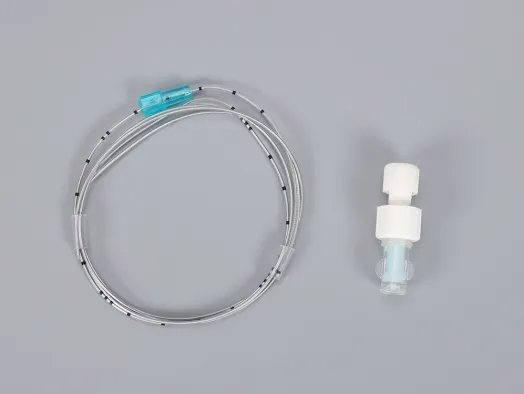
The Disposable Enhanced Epidural Anesthesia Catheter with Connector is a sterile, latex-free, single-use catheter system manufactured to the standards required for CE marking under the European Medical Device Directive. CE certification was first obtained by Zhejiang SuJia in 2004, preceded by ISO 9001:2000 quality management system certification in 2003. These qualifications reflect a structured approach to design control, process validation, and post-market surveillance that aligns with both European and international regulatory expectations.
The catheter body is produced from medical-grade polyurethane or polyamide material selected for its combination of softness, column strength, and chemical compatibility with standard local anesthetic agents including bupivacaine, ropivacaine, and lidocaine. The material must achieve a precise balance: flexible enough to follow the curve of the epidural space and reduce the risk of dural puncture or venous cannulation, yet stiff enough to advance without kinking during the threading phase.
The enhanced version of this catheter incorporates a reinforced design that addresses the clinical problem of catheter kinking and coiling within the epidural space — a failure mode that can result in inadequate block, accidental intravascular or intrathecal migration, or failure to withdraw the catheter intact. The reinforcement, typically a helical wire braid or embedded stiffener within the catheter wall, distributes bending forces more evenly along the length of the tube, preserving lumen patency even when the catheter takes on complex curvatures after threading.
Epidural catheters are manufactured in single-lumen and multi-lumen (typically three-hole) configurations. The multi-orifice tip — with one distal end hole and two lateral eyes positioned several millimetres proximal to the tip — is the most clinically accepted design because it distributes the injected volume more evenly within the epidural space, reduces the risk of one-sided or patchy block, and provides alternative flow paths if one opening becomes partially occluded against the epidural fat or venous plexus.
Tip profile geometry influences both threading ease and tissue interaction. A closed, rounded tip with lateral eyes offers protection against inadvertent perforation of the dura or epidural veins during advancement. The outer diameter of the catheter is sized to pass through the internal bore of the epidural needle — standardly a 17G or 18G Tuohy needle — with a working outer diameter typically in the range of 0.85 mm to 1.0 mm, allowing controlled threading with a tactile feel of minimal resistance.
The connector attached to the proximal end of the catheter provides the interface between the epidural line and the injection syringe or infusion pump. A standard Luer-lock fitting ensures a pressure-resistant, leak-free connection compatible with all common epidural administration devices. The connector housing incorporates a bacterial/viral filter port in some configurations and is designed with a low dead-space volume to minimize the quantity of drug retained in the connector lumen during bolus dosing.
The catheter graduation markings are printed in non-toxic, permanently bonded ink at defined intervals — typically every centimetre — to allow the clinician to confirm and document the depth of catheter insertion relative to the skin entry point. Accurate markings are essential for establishing that an appropriate length of catheter lies within the epidural space (conventionally 3–5 cm) while avoiding excessive threading that increases the risk of catheter malposition.
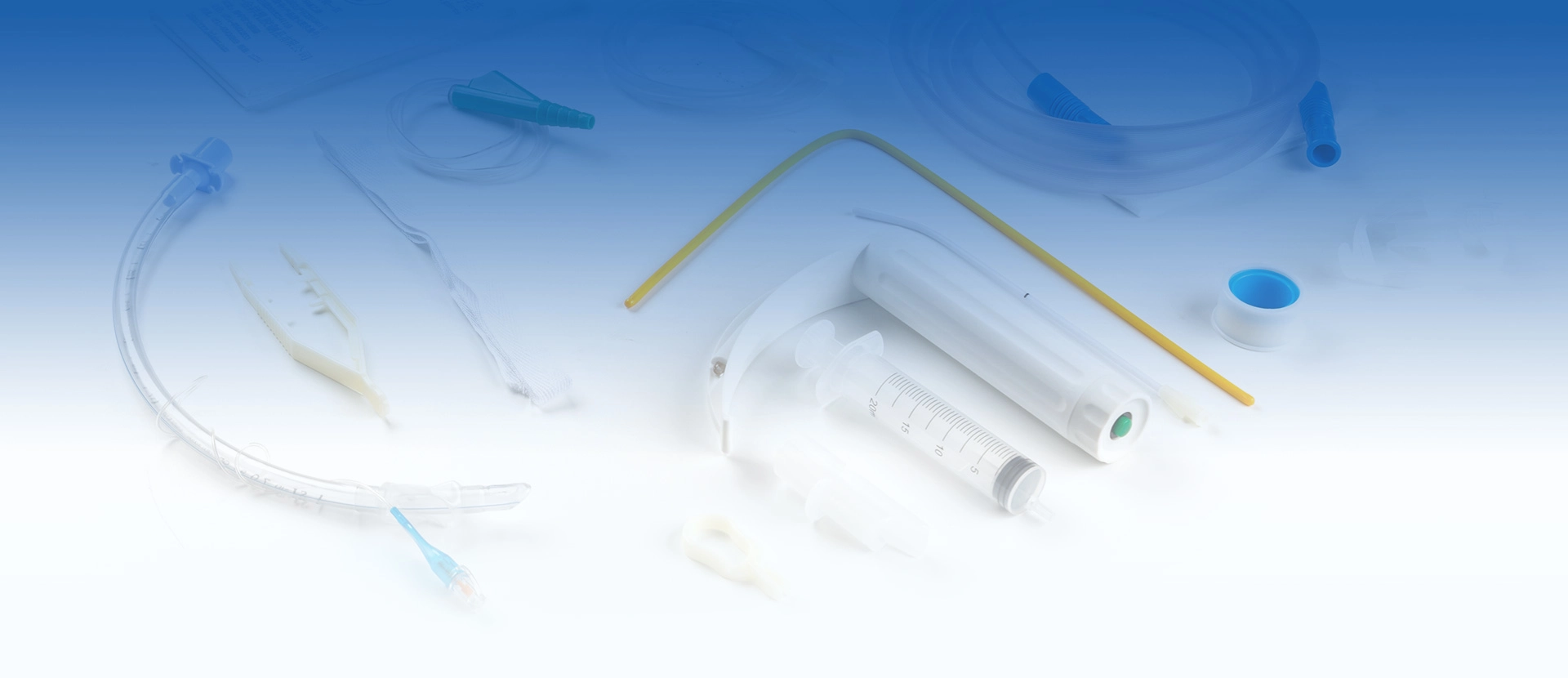
The Disposable Anesthesia Puncture Kit represents a complete, pre-packaged assembly of all components required to perform an epidural procedure from skin preparation through catheter fixation. Consolidating these instruments into a single validated, sterile-barrier package eliminates the need to source and individually check multiple items before each procedure, reduces the risk of assembly errors, and simplifies sterile field setup in busy clinical environments.
The kit configuration reflects the clinical workflow of epidural placement: access instruments for skin penetration and needle guidance are sequenced together with the loss-of-resistance syringe, catheter, and fixation supplies. Each component within the kit is selected and validated to work together as a functional system rather than as a collection of independently sourced parts.
Sujia holds the distinction of being the first enterprise in China to manufacture disposable anesthesia puncture kits, having obtained the foundational patent in 1994 — more than three decades of focused production experience that informs current design choices and quality benchmarks.
The epidural needle is the central access instrument of the kit. The Tuohy needle design — characterized by its curved, blunt-bevelled tip — is specifically engineered to penetrate the ligamentum flavum with a controlled force profile and to deflect the advancing catheter in a cephalad direction once the tip enters the epidural space. The deflection angle of the curved tip facilitates catheter threading without the needle tip acting as a guide that could create a false passage.
Needles are typically manufactured from medical-grade stainless steel with electrolytic surface treatment to minimize particulate shedding and corrosion during sterilization. The gauge selection most common in clinical practice is 17G or 18G, providing an internal lumen diameter sufficient to accept a standard 19G or 20G epidural catheter. The needle hub is colour-coded and graduated to provide depth reference during advancement through subcutaneous tissue and paraspinous musculature.
The bevel must remain sharp and uniform across the curve — a manufacturing tolerance requirement that necessitates precision grinding and consistent quality inspection. A dull or irregular bevel increases the force required for ligament penetration and raises the risk of dural puncture, which is one of the most consequential complications of epidural anesthesia.
Loss-of-resistance is the standard technique for confirming epidural space entry. As the needle tip advances through the ligamentum flavum — a structure of high mechanical resistance — continuous or intermittent pressure on the syringe plunger meets firm resistance. At the moment the tip passes into the lower-pressure epidural space, the plunger advances freely, providing tactile confirmation of correct needle position.
The loss-of-resistance syringe included in the kit is a low-friction device manufactured to deliver highly sensitive feedback through the plunger. The barrel and plunger surfaces are processed to achieve a controlled friction coefficient — sufficient to hold position under gravity when loaded with saline or air, yet responsive enough that the clinician can detect the subtle pressure change marking epidural entry. Glass-equivalent smoothness is achieved in high-quality plastic syringes through precision moulding and surface finishing.
A bacterial and particulate filter is typically included in the kit to be interposed in the epidural line during continuous infusion or repeated bolus administration. These filters operate with a pore size of 0.2 μm, sufficient to remove bacteria and fungal spores from solutions administered into the neuraxial space, where infection has potentially catastrophic consequences including meningitis or epidural abscess.
Catheter fixation to the skin is accomplished using the adhesive dressing included in the kit. Secure fixation is clinically significant because catheter dislodgement during prolonged infusions — common in labour analgesia lasting many hours — can render the block ineffective at a critical moment. The dressing material is hypoallergenic and moisture-resistant, designed to maintain adhesion through perspiration and patient movement.
Additional components within the kit include sterile drapes, disposable syringes for test dose and initial bolus administration, a skin preparation swab, and sterile gloves in selected configurations. The choice of components can be customized for specific clinical applications — a compact labour analgesia configuration differs in content from a thoracic epidural kit intended for post-operative pain management following major abdominal surgery.
Epidural kits from the regional anesthesia category are indicated for use across a broad range of procedures and patient populations. Obstetric applications include epidural labour analgesia, combined spinal-epidural (CSE) techniques for caesarean section, and post-partum perineal repair. Surgical applications encompass colorectal, urological, orthopaedic lower-limb, and thoracic procedures where epidural analgesia is used as the primary anaesthetic technique or as part of a multimodal analgesic strategy to reduce systemic opioid consumption.
Chronic pain management also utilizes epidural catheter systems for therapeutic steroid injections, diagnostic nerve root blocks, and continuous epidural infusion in palliative care settings. The technical demands differ between these applications — a single-shot injection kit for pain medicine does not require the catheter threading components needed for surgical anaesthesia — and the product range allows clinicians to select the configuration that matches their specific procedural needs.
All materials in contact with the patient or with injected solutions must meet biocompatibility requirements as defined under ISO 10993 — the international standard for biological evaluation of medical devices. This includes cytotoxicity testing, sensitization testing, and intracutaneous reactivity evaluation. The polymers used in catheter construction and syringe components must also demonstrate chemical compatibility with the anesthetic agents they will contact, ensuring that neither leaching of plasticizer into the drug solution nor degradation of the catheter material occurs under clinical storage and use conditions.
Sterilization of the complete kit is performed using ethylene oxide (EO) gas, the industry-standard method for complex multi-component devices that cannot withstand the temperatures of steam autoclave sterilization. EO penetrates all layers of the packaging and achieves a sterility assurance level (SAL) of 10⁻⁶, meaning a theoretical probability of less than one in one million that any viable microorganism remains on or in the device. Post-sterilization aeration and residual EO testing are conducted to verify that residual gas levels are within safe limits before product release.
The sterile barrier system — typically a combination of medical-grade paper and polyethylene or Tyvek laminate pouch — is validated to maintain sterility under the transportation and storage conditions specified in the product labelling, including temperature cycling and humidity exposure.
Zhejiang SuJia Medical Device Co., Ltd. was among the first batch of enterprises to pass the National Medical Products Administration (NMPA) GMP pilot acceptance in China, achieving this distinction in 2007 with high marks. GMP compliance ensures that manufacturing facilities, process controls, personnel qualification, and documentation systems all conform to defined quality standards — not as a snapshot but as an ongoing operational discipline verified by regulatory inspection.
With a clean room facility of 110,000 m² classified at Class 100,000, the manufacturing environment provides controlled particulate and microbial conditions appropriate for the production of sterile medical devices. More than 180 professional technicians support production, quality testing, and process engineering functions. The company holds over 80 patents, reflecting sustained investment in product innovation rather than reliance on static design.
International market distribution spans over 30 countries, supported by more than 100 cooperation partners. Products with CE marking are eligible for distribution across European Economic Area member states without additional country-specific conformity assessments, providing a clear regulatory pathway for hospitals and distributors operating in regulated markets. Some products have also obtained FDA recognition for the United States market.
Customers and procurement specialists can reach the team directly through the contact page or by email at global@zjsj.com.cn for technical enquiries, sample requests, and OEM/customization discussions.
The R&D programme at SuJia has been formally recognized through the establishment of the Zhejiang University–SuJia Polymer Medical Devices Joint Research Laboratory in 2010, a collaboration that brings academic polymer science expertise to bear on practical device engineering challenges. This institutional relationship supports the development of improved catheter materials, surface treatments, and composite structures that address clinical limitations identified through clinician feedback and post-market surveillance data.
Annual introduction of new patented products ensures that the design portfolio evolves in response to clinical needs and emerging regulatory requirements. The 2018 receipt of the 20th China Patent Excellence Award — issued by the China National Intellectual Property Administration — acknowledges the quality and originality of the company's intellectual property, not merely its volume.
Epidural anesthesia does not operate in isolation from the broader anesthesia workflow. The complete product ecosystem at SuJia addresses adjacent clinical needs through complementary categories. The general anesthesia category covers airway management and inhalation anesthesia delivery systems relevant to patients who progress from regional to general techniques. The pain management category extends the continuum of care into post-operative and chronic pain settings where epidural and peripheral nerve block techniques are used for sustained analgesia. The infusion category provides the vascular access and fluid delivery infrastructure that operates alongside anesthesia management in every surgical case. The monitoring category supports the physiological surveillance required during anesthetic procedures, and the nursing care category addresses patient care continuity in the peri-operative environment.
This breadth of product coverage allows institutions to consolidate procurement relationships and ensures that the clinical and quality standards applied to epidural kit production are consistent with those governing every other SuJia product that a patient or clinician may encounter.
What gauge epidural needle is included in the kit? The Tuohy needle in the standard configuration is available in 17G and 18G, with the 17G being the most common choice for adult epidural placement due to the balance it achieves between insertion force, tactile feedback, and catheter compatibility.
Is the catheter compatible with epidural infusion pumps? Yes. The Luer-lock connector at the proximal end of the catheter is designed to interface with standard epidural administration sets and programmable infusion pumps used for patient-controlled epidural analgesia (PCEA) and continuous epidural infusion protocols.
What is the shelf life of the sterile kit? The sterile barrier and packaging are validated to maintain sterility for a defined period under specified storage conditions. Product labelling carries the expiry date and required storage parameters — typically room temperature away from direct light and moisture.
Can component configurations be customized for specific clinical settings? SuJia offers OEM and configuration customization services for institutional and distributor customers. Specific inclusions, packaging language, and labelling requirements can be discussed through the contact channel.
Founded in 1992 and headquartered at No. 168 Zhenxing Road, Jiaxing, Zhejiang, China, Zhejiang SuJia Medical Device Co., Ltd. has spent over three decades focused on the development and manufacture of anesthesia and related medical consumables. The company originated the disposable anesthesia puncture kit in China and remains among the top three producers in China's anesthesia product manufacturing sector. CE product certification has been maintained continuously since 2004 alongside ISO quality management certification and NMPA GMP compliance.
With annual sales reaching significant scale across domestic and international markets, and distribution covering 30 or more countries through 100 or more cooperation partners, SuJia brings both the production capacity and regulatory pedigree required by institutional buyers who need reliable, compliant, and technically capable epidural kit products. Further information about the company's history, certifications, and capabilities is available on the about page, and the latest company developments and exhibition participation are published on the news channel.