Effective pain management is one of the most critical aspects of modern clinical care. From postoperative recovery wards to interventional neurology suites, the precision and reliability of pain delivery systems directly determine patient outcomes. As a CE certified medical consumable factory established in 1992, Zhejiang SuJia Medical Device Co., Ltd. has dedicated over three decades to developing and manufacturing disposable and electronic pain management devices that meet the highest standards of clinical performance, infection control, and regulatory compliance. Our pain management category encompasses five core product lines, each engineered to address a distinct clinical challenge — from continuous postoperative analgesia to minimally invasive treatment of trigeminal neuralgia.
Our manufacturing base in Jiaxing, Zhejiang province covers more than 110,000 m² of Class 100,000 clean room space, staffed by over 180 professional technicians. We hold CE certification (obtained in 2004), ISO 9001:2000 quality management system certification, and were among the first batch of enterprises in China to pass NMPA GMP pilot acceptance with high marks. With more than 80 active patents and products reaching more than 30 countries and regions, SuJia continues to set technical benchmarks in the pain management field. To learn more about our company background and manufacturing capabilities, visit our about page.
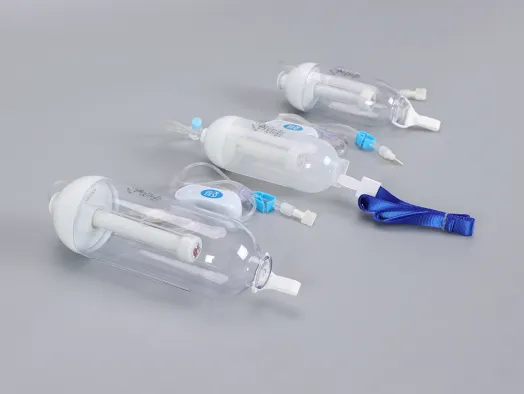
The disposable infusion pump represents the foundational technology in non-electronic, elastomeric drug delivery for pain management. Unlike peristaltic or syringe-driven systems that require external power, the disposable infusion pump operates on a purely mechanical principle: a pre-filled elastomeric reservoir generates a continuous, calibrated internal pressure that drives medication through a flow restrictor at a predetermined rate. This eliminates the risk of electrical failure, alarm fatigue, and battery dependency — making it particularly suitable for ambulatory care, outpatient surgical settings, and patient-controlled peripheral nerve block delivery.
From a technical standpoint, the core of the device is a medical-grade silicone or polyisoprene balloon reservoir that maintains consistent internal elastic pressure across a wide range of fill volumes. The flow rate is governed by a capillary-type flow restrictor, typically constructed from precision-drawn borosilicate glass or medical polymer tubing, and is expressed in milliliters per hour (ml/h). Common clinical configurations include 2 ml/h, 4 ml/h, 5 ml/h, and 10 ml/h, with total reservoir volumes ranging from 100 ml to 500 ml. The rate accuracy of high-quality devices is typically within ±15% at 32°C (body temperature), a specification defined by ISO 28620 for non-electrically driven portable infusion pumps.
Critical design features include an inline 0.2 μm bacterial-retentive filter to prevent microbial contamination of the drug solution, a luer-lock connector system ensuring secure, leak-free attachment to epidural, peripheral nerve block, or intravenous catheters, and an optional patient-controlled bolus button (PCA) with a built-in lockout interval to prevent overdose. The entire device is single-use, latex-free, and DEHP-free, addressing both infection control requirements and regulatory restrictions on plasticizers in drug-contact components. SuJia's disposable infusion pumps are compatible with standard analgesia regimens including ropivacaine, bupivacaine, levobupivacaine, and dilute opioid combinations.
Because the disposable infusion pump requires no programming, no power source, and minimal nursing intervention, it reduces the total cost of care in outpatient and same-day surgery settings while maintaining reliable drug delivery. Clinicians working across our broader infusion category will find that this device integrates seamlessly into multimodal analgesia protocols.
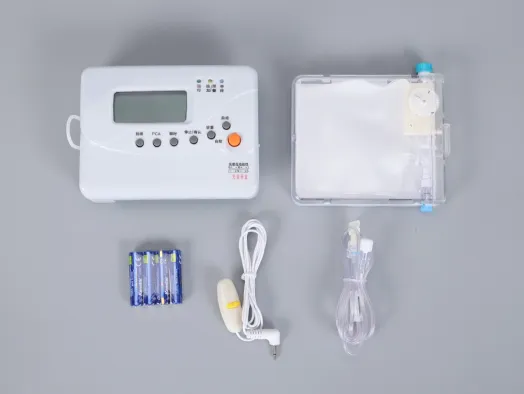
The electronic analgesia pump is a microprocessor-controlled drug infusion device designed specifically for patient-controlled analgesia (PCA), patient-controlled epidural analgesia (PCEA), and continuous regional anesthesia infusion in inpatient settings. Unlike elastomeric pumps, the electronic platform provides real-time programmability, dose-event logging, alarm outputs, and bidirectional communication with nurse call systems or hospital information management platforms.
The pump's delivery mechanism is typically a precision stepper-motor-driven piston or peristaltic mechanism, offering flow rate accuracy within ±5% across a broad clinical range — typically 0.1 ml/h to 99 ml/h in continuous mode, with bolus volumes programmable from 0.1 ml to 10 ml and lockout intervals from 5 minutes to 60 minutes. These parameters are set by clinicians via a keypad or touchscreen interface protected by a password lock to prevent unauthorized modification. The pump also supports a loading dose function, allowing a one-time higher-volume delivery at initiation of therapy to achieve rapid therapeutic plasma levels before transitioning to the maintenance infusion rate.
Safety architecture in the electronic analgesia pump includes multiple redundant alarm systems: occlusion detection (upstream and downstream), air-in-line detection via ultrasonic sensor, end-of-infusion and near-empty alerts, door-open alarms, and low-battery warnings. Occlusion pressure thresholds are typically configurable between 150 mmHg and 900 mmHg, enabling clinicians to set sensitivity appropriate for epidural (lower pressure tolerance) versus intravenous (higher tolerance) routes. The device's internal memory retains a timestamped event log of all bolus requests, successful deliveries, and alarm events, which supports clinical audit, pharmacy reconciliation, and quality improvement review.
From a connectivity standpoint, modern electronic analgesia pumps support USB data export and, in advanced configurations, RS-232 or wireless integration with bedside monitoring systems. The pump housing is typically rated IP34 or higher for splash resistance, and the drug reservoir — available as proprietary or standard bag-in-cassette configurations — is generally compatible with volumes of 50 ml to 300 ml. Battery life is designed to exceed 72 hours of continuous operation on standard alkaline or lithium cells. SuJia's electronic analgesia pump reflects the same R&D investment detailed on our research and development page, incorporating iterative clinical feedback into each product generation.
The disposable electronic controlled analgesia pump occupies a clinically important middle ground between purely mechanical elastomeric devices and fully reusable electronic platforms. It combines a disposable, pre-filled drug reservoir with an integrated electronic drive and control module — delivering the programmability of a traditional PCA pump with the infection prevention benefits and zero-reprocessing-cost advantages of a single-use device.
The technical architecture of this product typically features a miniaturized stepper motor or piezoelectric actuator integrated into the disposable body, drawing power from a small, long-life primary battery sealed within the casing. The electronic module is factory-set or clinician-configurable via a compact interface, and is capable of executing basal rate, PCA bolus, and lockout interval parameters. Flow rate accuracy is maintained within ±10% under normal temperature conditions (15°C–40°C), meeting the requirements of IEC 60601-2-24 for infusion pump safety. The disposable nature of the device ensures that fluid pathways are never reused, eliminating cross-contamination risks associated with drug residue in reusable pump cassettes.
This product is particularly significant in high-volume postoperative environments — such as day surgery centers, orthopedic wards, and obstetric units — where the cleaning, sterilization, and tracking workflow for reusable pump inventories represents a substantial operational burden. The disposable electronic controlled analgesia pump effectively decouples pain management capability from equipment lifecycle management. Each unit is EO-sterilized, individually packaged, and carries a defined shelf life of typically 24 to 36 months from manufacture date.
From a clinical protocol perspective, the device supports epidural, intravenous, and subcutaneous delivery routes, and is compatible with standardized analgesic mixtures including morphine, fentanyl, sufentanil, and ropivacaine-based regional combinations. The patient-activation button is ergonomically designed for ease of use by postoperative patients, including elderly individuals with limited hand strength. It complements our portfolio of general anesthesia products and regional anesthesia solutions, forming a complete perioperative pain pathway from induction through recovery.
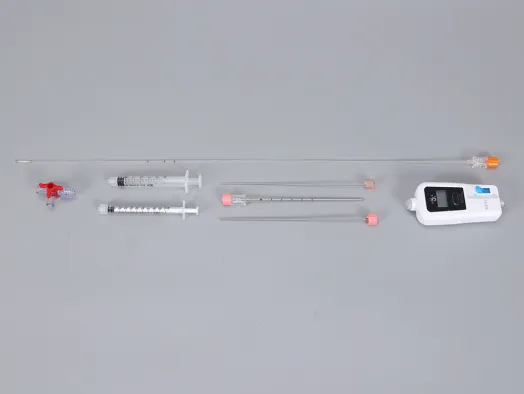
The disposable minimally invasive balloon compression catheter kit for trigeminal neuralgia is a specialized, single-use procedural kit designed for percutaneous balloon compression (PBC) — one of the most established surgical interventions for classic trigeminal neuralgia unresponsive to pharmacological management. PBC is a well-documented neuroablative technique in which a balloon catheter is advanced through the foramen ovale to the Meckel's cave, inflated to compress the trigeminal ganglion and produce controlled myelin damage selectively in large-diameter pain-conducting A-beta fibers while relatively sparing small-caliber sensory and motor fibers.
The catheter kit consists of several precisely engineered components: a 14-gauge cannula with stylet for transcutaneous foramen ovale access, a fogarty-style balloon catheter (typically 4 French outer diameter, balloon volume 0.5–1.0 ml) designed to achieve the characteristic "pear-shaped" configuration on lateral fluoroscopic imaging that correlates with optimal ganglion compression, and a connection port compatible with a standard inflation syringe or dedicated inflation pressure pump. The cannula tip geometry and bevel design are critical — they must allow reliable foramen ovale puncture under fluoroscopic or image-guided navigation while minimizing the risk of vascular injury to the internal carotid artery and middle meningeal artery.
Material selection is a key engineering consideration: the balloon must be non-compliant enough to achieve predictable, reproducible inflation volumes yet flexible enough to conform to the anatomy of Meckel's cave. The shaft must maintain column strength to transmit rotational and axial force from the operator's hand to the balloon tip without buckling in the pterygoid fossa corridor. Radiopaque markers embedded in the catheter shaft enable accurate fluoroscopic positioning. The entire kit — cannula, catheter, stylet, and connectors — is sterilized by ethylene oxide and packaged under controlled cleanroom conditions to ensure sterility assurance level (SAL) of 10⁻⁶.
This product is intended for use by neurosurgeons and interventional pain specialists in operating room environments under fluoroscopic or CT guidance, general or sedation anesthesia, and with full hemodynamic monitoring capacity. It directly addresses one of the most debilitating neuropathic pain conditions — trigeminal neuralgia, sometimes called the "suicide disease" due to its intensity — offering a minimally invasive alternative to open microvascular decompression with a reported immediate pain relief rate exceeding 90% in appropriate patient populations. The kit is designed for complete single-patient use, ensuring no risk of cross-contamination between procedures and eliminating the need for instrument sterilization tracking.
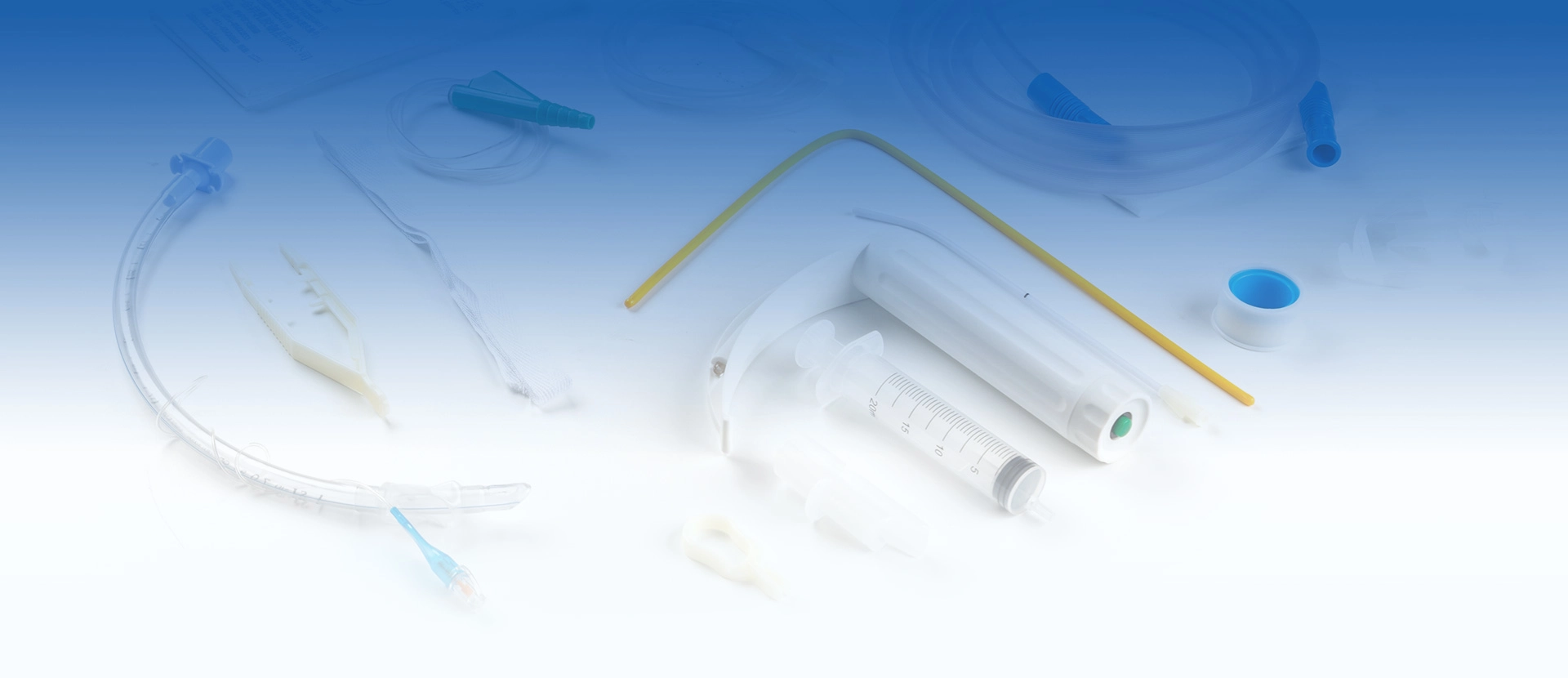
The balloon inflation pressure pump — also referred to as an indeflator — is a hand-operated, high-precision device used to inflate medical balloons during interventional procedures to a defined, measurable, and controllable pressure. In the context of pain management, it serves as the inflation instrument for the balloon compression catheter used in trigeminal neuralgia treatment, as well as in other interventional pain procedures involving balloon-assisted access or dilation.
The device consists of a syringe-style body with a threaded plunger mechanism, a large-volume reservoir (typically 20 ml) for inflation medium (contrast medium or saline), a high-accuracy pressure gauge calibrated in atmospheres (atm) and/or pounds per square inch (psi), and a luer-lock tip compatible with standard balloon catheter hubs. The threaded plunger provides the mechanical advantage necessary to generate and hold pressures typically ranging from 0 atm to 20 atm (0 to approximately 294 psi), with fine incremental pressure adjustment achievable without uncontrolled pressure spikes. Many models include a rapid deflation mechanism — a one-touch release valve — to allow prompt balloon deflation in response to patient hemodynamic changes or procedural endpoints.
The pressure gauge is a critical accuracy component. High-quality indeflators use a Bourdon tube or diaphragm-based gauge with a pressure accuracy of ±1 atm or better, enabling the operator to apply the exact inflation volume-pressure combination specified in the procedural protocol. For balloon compression of the trigeminal ganglion, the typical inflation volume is 0.5–0.7 ml of contrast medium, with the operator observing both fluoroscopic balloon shape and duration of compression (typically 60–120 seconds) rather than absolute pressure. The indeflator must therefore be capable of maintaining a stable, held pressure without creep or backflow during the compression dwell period.
The device body is constructed from medical-grade polycarbonate for transparency — allowing direct visual inspection of the inflation medium for air bubbles — and stainless-steel or reinforced polymer for the plunger mechanism to resist the mechanical stresses of high-pressure inflation. It is supplied sterile (EO or gamma sterilization) for single procedural use and is compatible with the disposable balloon compression catheter kit for seamless procedural integration. For clinical teams managing interventional pain programs, the combination of the balloon compression catheter kit and this inflation pressure pump provides a fully controlled, reproducible procedural system.
All pain management products manufactured by Zhejiang SuJia Medical Device Co., Ltd. are produced under a comprehensive quality management system that spans raw material qualification, in-process inspection, finished product testing, and post-market surveillance. Our manufacturing environment meets Class 100,000 cleanroom classification requirements under ISO 14644-1, ensuring particulate and microbial contamination control appropriate for sterile medical device manufacture.
The company holds CE marking under EU Medical Device Directive / Medical Device Regulation for applicable product lines, allowing distribution throughout the European Economic Area and associated markets. CE certification was first obtained in 2004, and product files are maintained with an EU-based Notified Body with ongoing annual surveillance. NMPA registration under China's Class II and Class III medical device regulatory framework covers domestic market distribution. ISO 9001:2000 quality management system certification underpins our manufacturing process discipline, and the company was one of the first in China to complete NMPA GMP pilot acceptance — reflecting the quality culture that has been central to SuJia since its founding.
Sterilization validation follows ISO 11135 (EO sterilization) protocols. Biocompatibility of all patient-contact materials is evaluated in accordance with ISO 10993 series — encompassing cytotoxicity, sensitization, intracutaneous reactivity, and systemic toxicity assessments. Shelf-life claims are supported by accelerated aging studies per ASTM F1980 and real-time aging data. Packaging integrity is validated per ASTM F2054/F2095 (burst and seal strength testing) and ISO 11607. These technical standards apply uniformly across our pain management, monitoring, and nursing care product lines.
Pain management devices from SuJia are designed for integration into a range of clinical protocols. Postoperative analgesia following orthopedic, abdominal, thoracic, and obstetric surgery utilizes our disposable and electronic pump platforms, which are compatible with epidural catheters and peripheral nerve block catheters supplied through our regional anesthesia category. Intravenous PCA for general postoperative pain, oncology pain, and palliative care pain management also falls within the intended use scope of the electronic and disposable electronic controlled pumps.
For the interventional neurology setting, the balloon compression catheter kit and pressure pump are designed for use by trained neurosurgeons or interventional pain specialists in standard operating room or interventional suite environments. The procedure is typically performed under general anesthesia or deep sedation, with intraoperative monitoring of heart rate and blood pressure given the risk of trigeminal cardiac reflex (bradycardia or asystole) during balloon inflation. The kit's design supports direct integration with fluoroscopy or C-arm imaging for real-time procedural guidance.
All five products in this pain management range are designed with healthcare worker safety in mind. Needle shields, locking connectors, and clearly labeled priming lines reduce the risk of needlestick injury and medication misconnection events. Residual drug disposal is simplified by the disposable design, reducing pharmacy and clinical staff exposure to concentrated analgesic solutions.
Sourcing pain management consumables from a manufacturer with deep clinical understanding, robust regulatory standing, and consistent production quality is essential for both patient safety and procurement efficiency. SuJia has been the originator of the disposable anesthesia puncture kit series in China and ranks among the top three manufacturers in China's anesthesia products sector. Our R&D program — detailed on the research and development page — introduces multiple new patented products to market annually, backed by our collaboration with Zhejiang University's Polymer Medical Devices Joint Research Laboratory and our designation as a National Key High-tech Enterprise and Zhejiang Province High-tech Enterprise R&D Center.
We serve more than 100 cooperation partners across 30+ countries, with international sales supported by CE and FDA compliance documentation for applicable product lines. Our pain management devices can be supplied in bulk OEM configurations for distributors or private-label partners, with full regulatory dossier support for market registration in target countries. Annual sales exceed 800 million USD across all product lines, reflecting the scale and production capacity that enables reliable supply chain performance for high-volume institutional purchasers.