As a specialized medical consumable factory with more than three decades of manufacturing experience, Zhejiang SuJia Medical Device Co., Ltd. engineers infusion-related consumables that meet the critical demands of hospitals, ICUs, and clinical care settings worldwide. Our Infusion Category currently covers three core product lines: the Disposable Central Venous Catheter Insertion Tray, the Disposable Heparin Cap, and the Disposable Three-Way Stopcock. Each product is designed and manufactured under strict quality controls inside a 110,000 m² Class 100,000 clean room environment, complying with ISO 9001 quality management standards and holding CE certification for European markets as well as FDA recognition for the United States market. Whether you are a hospital procurement department or a global medical device distributor, our product range offers reliable performance, traceable sterility, and consistent dimensional accuracy across every batch.
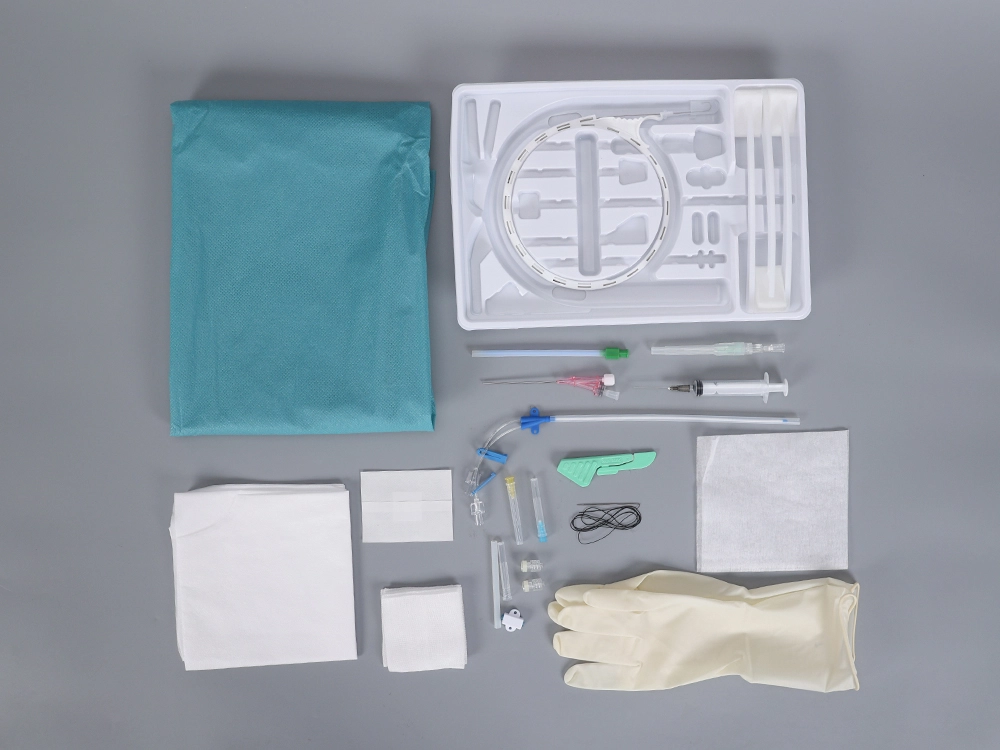
Central venous access is one of the most frequently performed invasive procedures in critical care, anesthesia, and oncology. A well-assembled insertion kit reduces procedural preparation time, lowers the risk of contamination, and standardizes the clinical workflow for both experienced clinicians and training staff. The Disposable Central Venous Catheter Insertion Tray supplied by SuJia Medical is a fully pre-packaged, sterile tray that consolidates every component required for a safe and efficient central venous catheter (CVC) placement into a single ready-to-open unit.
A complete CVC insertion tray typically integrates the following components, each individually verified for dimensional and material compliance before being sealed into the final package:
One multi-lumen central venous catheter constructed from medical-grade polyurethane (PU) or silicone, offering excellent flexibility and kink resistance at body temperature. Lumen configurations commonly available include single-lumen, double-lumen, and triple-lumen designs with French sizes ranging from 5 Fr to 9 Fr. The catheter surface may carry an anti-microbial coating (chlorhexidine/silver sulfadiazine impregnation) to reduce catheter-related bloodstream infection (CRBSI) risk.
One introducer needle, generally 18G, with an echogenic tip pattern for ultrasound-guided insertion. The thin-walled stainless-steel construction allows aspiration of venous blood at low resistance, confirming vessel entry before guidewire advancement.
One J-tip guidewire (Seldinger wire), typically in a 0.032-inch or 0.035-inch diameter and 60 cm length, housed inside a protective coil container. The flexible J-tip navigates venous curves without traumatizing the vessel wall.
One vessel dilator in graduated sizes to pre-dilate the subcutaneous tissue and vessel entry point prior to catheter advancement. Dilators are made from rigid medical-grade polypropylene for smooth, controlled insertion.
One scalpel or lancet for small skin incision when required by the access site anatomy.
Sterile drapes, towels, and a fenestrated field drape to establish the sterile field around the insertion site.
Sterile gloves paired to standard clinical sizes.
One or more syringes (commonly 5 mL and 10 mL), used for local anesthetic delivery, blood aspiration, and flush.
Suture material and a securing device or statlock to stabilize the catheter at the skin surface post-insertion.
One or more disposable heparin caps pre-loaded on each catheter lumen hub to maintain lumen patency and preserve a closed system between uses.
The CVC insertion tray is indicated for patients requiring any of the following: total parenteral nutrition (TPN) delivery, hemodynamic monitoring via central venous pressure (CVP) measurement, administration of vasoactive medications or high-osmolarity drugs incompatible with peripheral veins, rapid large-volume fluid resuscitation, long-term antibiotic therapy, and renal replacement therapy (RRT) access. Common insertion sites include the internal jugular vein, subclavian vein, and femoral vein, each carrying specific anatomical considerations that influence tray component selection.
For patients managed across pain management or general anesthesia protocols, central venous access provided by this tray integrates directly into the broader invasive monitoring and drug delivery ecosystem present in operating rooms and intensive care units.
Catheter material: polyurethane (PU), body temperature-softening grade, Shore hardness 80A–95A; or silicone for longer dwell requirements.
Catheter length: standard 16 cm to 30 cm depending on insertion site and patient anatomy. Graduated centimeter markings on the catheter body enable depth control.
Radiopacity: the catheter incorporates a barium sulfate radiopaque stripe running the full length, confirmed visible under standard fluoroscopic imaging at standard mA settings.
Working pressure: each lumen rated for a minimum flush pressure of 300 psi without leakage or lumen collapse.
Guidewire: 0.032" or 0.035" diameter, stainless steel or nitinol core, PTFE-coated for low-friction advancement, length options 45 cm or 60 cm.
EO sterilization cycle: all components are sterilized by ethylene oxide (EtO) with a validated Sterility Assurance Level (SAL) of 10⁻⁶, meeting ISO 11135 requirements.
Shelf life: 3 to 5 years in intact double-peel packaging stored at ambient temperature below 30°C and relative humidity below 70%.
Lot traceability: every tray carries a full lot number, manufacturing date, expiry date, and UDI barcode to comply with global device tracking regulations.
Ultrasound-compatible needle: the echogenic grinding pattern on the introducer needle tip diffuses ultrasound beam energy to produce a bright reflection artifact, enabling real-time needle visualization even at steep insertion angles. This reduces the number of needle passes and arterial puncture incidents.
Kink-resistant lumen construction: the catheter incorporates a helical wire reinforcement in the catheter wall of certain models, preventing lumen collapse under high infusion pressure or when the catheter crosses anatomically tight spaces such as the subclavian angle.
Bifurcated hub with color-coded lumen ports: each lumen hub and extension line is color-coded per international conventions (proximal/brown, medial/blue, distal/white) so nursing staff can identify infusion pathways at a glance without tracing lines.
Smooth-tip dilator taper: the dilator tip profile follows a mathematically optimized taper angle that minimizes tissue trauma while providing sufficient dilation to accept the catheter without tearing the vessel entry point.
Pre-loaded flush syringes: several configurations include pre-filled normal saline syringes, reducing preparation steps and the risk of air entry during lumen priming.
Closed-system design: factory-assembled caps on lumen hubs maintain a sealed internal environment until first clinical use, reducing contamination risk during unpacking and draping.
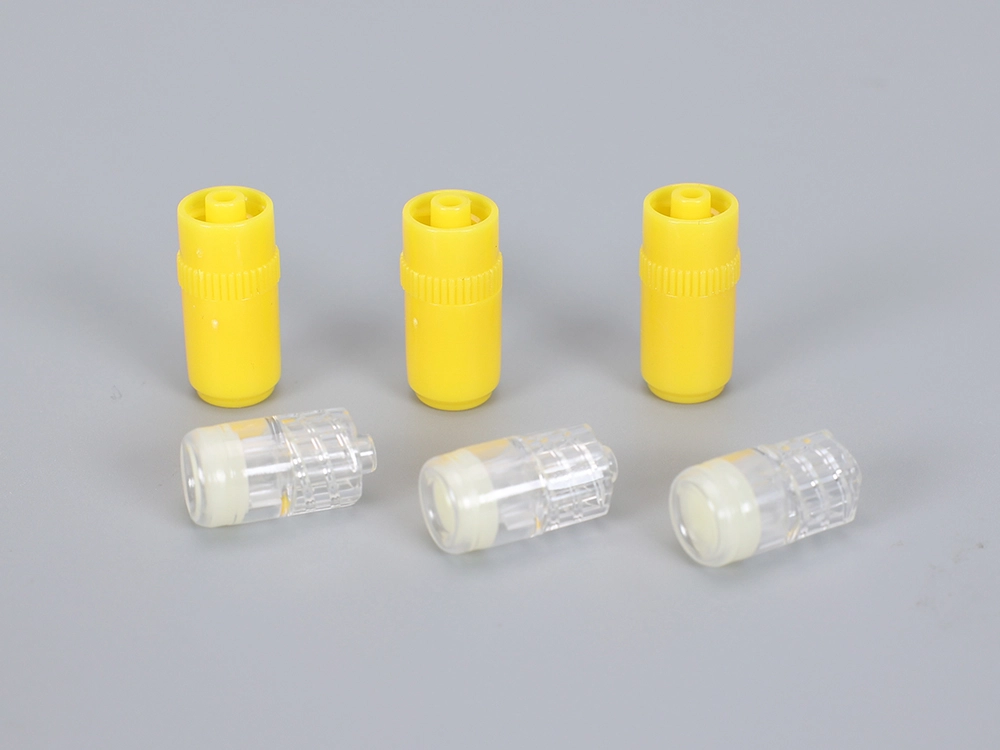
A heparin cap, also called an injection cap or IV cap, is a small but operationally critical component of any vascular access device. It seals the open end of an intravascular catheter or needle between infusion episodes, maintains a heparin lock solution within the catheter lumen to prevent thrombotic occlusion, and provides a needle-free or needle-access port for repeated medication administration without requiring catheter disconnection. The Disposable Heparin Cap manufactured by SuJia Medical is engineered to serve all standard Luer-lock and Luer-slip catheter hub configurations, covering peripheral IV catheters, central venous catheters, PICC lines, and port needles.
The heparin cap body is molded from medical-grade polycarbonate (PC) or acrylonitrile-butadiene-styrene (ABS) for dimensional stability across the clinical temperature range. The internal septum is a pierced or split silicone disk, providing resealability for standard 20G–22G needle access or, in needle-free variants, a positive-displacement elastomeric membrane that allows syringe tip engagement without a needle. The exterior surface is smooth and free of flash to allow comfortable single-hand handling by clinicians wearing sterile gloves.
Internal priming volume: 0.06 mL to 0.20 mL depending on model geometry. Low dead-space designs minimize the volume of heparin solution required and reduce drug dilution when transitioning from a heparin lock to drug infusion.
The female Luer connector is precision-molded to ISO 80369-7 dimensional tolerances, ensuring secure, drip-free connection to standard male Luer catheter hubs. Thread engagement force and disconnect force are tested against ISO 80369-7 mechanical requirements to prevent accidental disconnection during patient movement.
Heparin caps are used across all ward and critical care settings wherever a short or long-term vascular access device is in place and requires intermittent flushing and maintenance. Specific indications include:
Peripheral IV catheter maintenance between scheduled drug administration rounds in general wards, pediatric units, and day surgery centers.
Central venous catheter lumen capping during multi-lumen use, in conjunction with the Disposable Central Venous Catheter Insertion Tray to complete a closed infusion circuit.
PICC line maintenance in oncology and long-term home care settings where catheters may remain in place for weeks to months.
Arterial line maintenance, where a non-heparin flush variant may be selected to avoid systemic anticoagulation effects.
Integration with three-way stopcocks in multi-drug infusion assemblies common to ICUs and post-anesthesia care units.
Reseal cycles: the silicone septum is validated to maintain a positive fluid seal for a minimum of 100 consecutive needle penetrations without leakage or coring. This exceeds typical clinical replacement schedules of every 72–96 hours per institutional protocols.
Fluid leak test: each cap is tested at an internal pressure of 45 psi (310 kPa) with no visible leakage or deformation, meeting the requirements of ISO 15223 and EN 1707 for Luer accessories.
Bacterial barrier test: the assembled cap is challenged with a standardized bacterial suspension (Brevundimonas diminuta) to confirm that the septum prevents microbial ingress under normal use conditions, confirming compliance with ISO 11607 sterile barrier requirements.
Heparin compatibility: internal materials are tested for heparin adsorption using HPLC quantification. Adsorption rates must remain below 5% of the total heparin concentration in a 10 IU/mL sodium heparin solution under static contact conditions at 37°C for 24 hours, ensuring that the delivered heparin lock concentration is clinically effective.
Sterility: caps are EtO-sterilized individually in single-unit peel pouches with an SAL of 10⁻⁶. Each pouch displays lot number, manufacturing date, expiry date, and UDI code.
Latex-free: all contact materials are latex-free, eliminating the risk of type I hypersensitivity reactions in latex-allergic patients, complying with international latex-free labeling requirements.
Positive-displacement mechanism (selected models): the positive-displacement variant displaces a small volume of fluid into the catheter upon disconnection, actively preventing blood reflux into the catheter tip. This eliminates one of the primary mechanisms of fibrin sheath formation and catheter occlusion, reducing the nursing workload associated with catheter declotting procedures.
Pre-filled heparin solution option: certain market variants are supplied pre-filled with 100 IU/mL or 10 IU/mL heparin saline solution, ready for immediate use without bedside mixing, reducing preparation errors and saving nursing time.
Visual flow indicator: a transparent cap body allows nurses to visually confirm fluid presence and bubble-free priming before connection, reducing air embolism risk in high-flow clinical scenarios.
Color-coded cap bodies: available in multiple colors correlating to clinical pathway (arterial versus venous) or flush concentration, supporting at-a-glance differentiation at the bedside in high-acuity units.
Smooth disinfection surface: the cap exterior is free of surface crevices that could harbor pathogens, compatible with standard 70% isopropyl alcohol swabbing protocols per CDC guidelines for central line maintenance.
The three-way stopcock is a flow-control valve that enables clinicians to connect multiple fluid pathways to a single vascular access point, redirect flow between infusion lines, draw blood samples without line disconnection, and administer bolus drug doses into a running infusion stream. In ICU, operating room, and emergency medicine settings, stopcocks are used in manifold assemblies to manage five or more simultaneous drug infusions. The Disposable Three-Way Stopcock produced by SuJia Medical's infusion product line meets the precision and reliability demands of these high-stakes environments.
The stopcock body is injection-molded from transparent medical-grade polycarbonate, enabling visual inspection of fluid flow, air bubble presence, and blood flashback within the valve body. The rotating plug (luer plug or cock handle) is molded from colored polypropylene for tactile and visual position identification. The plug rotates through a precisely controlled arc using a detented cam mechanism that produces an audible and tactile click at each of the three stable flow positions: fully open, two-way diversion, and fully closed.
Three female Luer-lock ports are positioned at 90° intervals (T-configuration) or 120° intervals (Y-configuration depending on the model). Each port accepts a standard male Luer connector, a syringe tip, or a pre-attached male Luer cap. Port threads are machined to ISO 80369-7 tolerances for leak-free engagement at rated working pressures.
The dead space (internal volume) of the valve body is engineered to be as small as practical given the three-port geometry, typically 0.07 mL to 0.15 mL. This minimizes drug carryover between infusion pathway switches, a critical parameter in anesthesia and vasoactive drug management where concentration errors have direct hemodynamic consequences.
Anesthesia management: during procedures requiring general anesthesia, stopcocks connect infusion pumps carrying propofol, remifentanil, and muscle relaxants to the patient's IV line while preserving the ability to administer emergency bolus agents through a dedicated side port.
Intensive care multi-drug infusion: ICU nurses configure stopcock manifolds to consolidate vasopressors, sedatives, analgesics, and maintenance fluids into a structured, clearly labeled infusion assembly, reducing the risk of line mix-ups.
Hemodynamic monitoring: stopcocks on arterial lines allow the clinician to zero the pressure transducer (connecting the transducer to the atmosphere through the stopcock's off-position) and draw arterial blood gas (ABG) samples without disturbing the continuous pressure waveform circuit.
Post-operative pain management: combined with elastomeric pumps and epidural catheters used in pain management protocols, stopcocks allow bolus supplementation without pump disconnection.
Pediatric and neonatal use: low dead-space stopcocks are particularly important in neonatal ICUs where total infusion volumes are measured in milliliters per hour and internal dead-space volumes represent a meaningful proportion of total drug delivery.
Blood sampling: the third port of the stopcock allows syringe-based blood withdrawal from an arterial or venous line while the main infusion continues through the other two ports, eliminating repeated venipuncture and reducing patient discomfort and infection exposure.
Working pressure: rated burst pressure of the valve body assembly at no less than 400 kPa (58 psi) under static saline fill conditions, with no leakage or deformation. Dynamic pressure testing at 300 kPa during simulated pump-driven infusion confirms sustained sealing at realistic clinical flow rates.
Flow rate: the internal bore diameter is sized to achieve a minimum flow rate of 1,500 mL/h through the open pathway under a 150 cmH₂O driving pressure gradient, supporting high-flow scenarios such as rapid volume resuscitation.
Rotational torque: the plug actuation torque is calibrated to fall within 0.05–0.25 N·m, providing enough resistance to prevent accidental position change during patient handling or line manipulation while remaining operable with gloved, wet hands.
Chemical resistance: the polycarbonate body and polypropylene plug are tested against a panel of common IV drugs including heparin, dopamine, norepinephrine, potassium chloride, and sodium bicarbonate for 72-hour contact at 37°C with no dimensional change, discoloration, or leakage development exceeding baseline.
Luer connection retention force: female Luer-lock threads retain an attached male Luer connection at a tensile separation force of no less than 15 N, complying with ISO 80369-7 pull-off strength requirements.
Sterility: stopcocks are EtO-sterilized in individual peel pouches or strip packaging per ISO 11135, with SAL of 10⁻⁶. Packaging includes desiccant for humidity control during extended storage.
Flow direction indicators: laser-etched or molded arrows on the plug body and valve housing communicate the open/closed state of each port at all three luer positions, reducing operator error during rapid clinical assembly.
Manifold compatibility: the stopcock is compatible with standard manifold bar assemblies used in operating room setup, allowing six or more stopcocks to be mounted in a linear array with shared back-plate fixation.
360° rotatable connections: each Luer port can receive a syringe or line connector from any angular approach, reducing cable tension on IV lines connected to restless or repositioned patients.
Integrated extension tube option: selected configurations include a pre-attached 10 cm to 100 cm flexible extension line on one port, eliminating a connection point, reducing the total dead-space volume in the infusion train, and providing physical distance from the catheter hub to prevent IV bag weight stress from transmitting directly to the catheter.
Transparent body for flow visualization: clinicians can observe the fluid column within the stopcock body directly to confirm correct flow direction, detect air accumulation, and monitor blood flashback during sampling without disconnecting any lines.
Non-reflux handle design: the detented plug mechanism ensures that the handle cannot rest between two positions, eliminating the risk of partial-open states that could allow unintended drug crossflow between infusion pathways.
Low extractables profile: the polycarbonate body is selected from a grade certified to USP Class VI and ISO 10993 biocompatibility standards, with extractable levels confirmed below toxicological thresholds for the intended contact duration.
Coordination with heparin lock systems: after blood sampling or drug bolus, the stopcock port exposed to blood or concentrated drug is immediately sealed with a fresh disposable heparin cap, restoring the closed system and preventing catheter thrombosis at the exposed port.
All three infusion products described on this page are manufactured at the SuJia Medical main facility located at No. 168 Zhenxing Road, Jiaxing, Zhejiang, China. The facility operates under ISO 13485 quality management systems specific to medical device manufacturing, with a Class 100,000 (ISO Class 8) clean room totaling 110,000 m² serving all critical molding, assembly, and packaging operations. SuJia Medical was among the first batch of enterprises in China to pass the NMPA (National Medical Products Administration) GMP pilot acceptance inspection, establishing a compliance benchmark now held by the company for over two decades.
The company holds more than 80 granted patents across its product portfolio, including innovations in catheter material formulation, valve plug geometry, and sterile packaging design. An active R&D program operates in collaboration with the Zhejiang University–SuJia Polymer Medical Device Joint Research Laboratory, ensuring that manufacturing advances in materials science are translated directly into product improvements.
For international markets, SuJia Medical has obtained CE marking under EU Medical Device Regulation (MDR) requirements and maintains FDA 510(k) clearances for applicable product categories, supporting distribution to over 30 countries and regions through more than 100 global cooperation partners. The international sales division can be reached at global@zjsj.com.cn or by phone at +86-573-82222666.
Purchasers and procurement managers seeking technical datasheets, sterility validation reports, biocompatibility summaries, or regulatory documentation packets for any product in the Infusion Category are encouraged to submit inquiries via the contact page. Customized packaging formats, private-label options, and OEM manufacturing services are available subject to minimum order quantity agreements.
SuJia Medical's product portfolio extends well beyond infusion consumables. The following related categories share common application environments — operating rooms, ICUs, and hospital wards — with the infusion products described here, and are frequently procured together to complete a clinical department's consumable inventory.
The General Anesthesia Category covers breathing circuits, endotracheal tubes, laryngeal masks, and anesthesia machine filters that interact directly with the airway management phase of any surgical case requiring the vascular access that CVC trays and stopcocks support.
The Regional Anesthesia Category includes epidural kits, spinal needles, and nerve block trays where heparin cap sealing of epidural catheter hubs is standard practice to protect catheter patency between bolus top-up doses.
The Monitoring Category encompasses invasive pressure transducer kits, patient monitoring cables, and sampling lines that interface directly with the stopcock-equipped arterial and central venous pressure measurement circuits described in this article.
The Pain Management Category offers elastomeric pumps and patient-controlled analgesia (PCA) systems whose output lines commonly terminate at a stopcock port integrated into the patient's infusion assembly.
The Nursing Care Category includes wound care, urinary catheterization, and patient hygiene consumables that complement the infusion-related products during prolonged hospital stays.
Comprehensive information on the full SuJia Medical device range is available on the product overview page. Company background, certification history, and corporate social responsibility initiatives are detailed on the About page.